Dog Cataract Surgery Price: What Plano Pet Owners Should Expect
Dog Cataract Surgery Price: What Plano Pet Owners Should Expect
If you’re a dog owner in Plano, TX, facing the possibility of cataract surgery for your companion, you’re likely searching for clarity on the dog cataract surgery price and what the process entails. At Animal Eye Specialists, we understand how important your dog’s vision is to their quality of life and your peace of mind. As a board-certified veterinary ophthalmology clinic located at 1545 W Plano Pkwy, Plano, TX 75075, we specialize exclusively in advanced eye care for pets throughout Plano and surrounding communities. In this guide, we’ll walk you through the factors that influence the cost of dog cataract surgery, what’s included in a high-quality surgical package, and why entrusting your dog’s eyes to a specialist team makes a difference for long-term vision and overall care. By the end, you’ll feel informed and empowered to make the best decision for your dog’s eye health.
Recognizing Cataracts in Your Dog: When Is Surgery Needed?
Cataracts are a common cause of vision loss in dogs, especially as they age or in certain breeds that are genetically predisposed. Many pet owners first notice a cloudy, bluish, or white appearance in their dog’s eyes. Other signs that may indicate cataracts include your dog bumping into furniture, hesitating in new environments, or appearing more cautious on walks. Some dogs may become reluctant to go up or down stairs or seem startled by sudden movements.
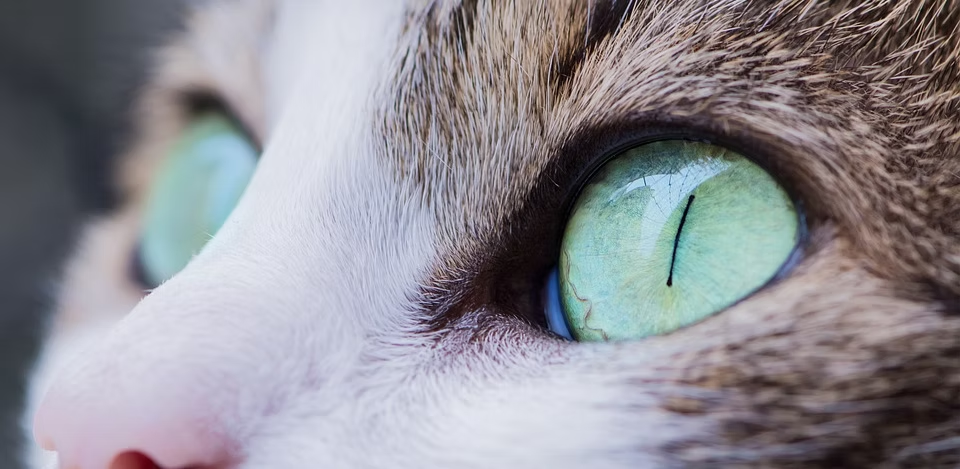
Cataracts develop when the normally clear lens inside the eye becomes opaque, blocking light from reaching the retina. This can lead to partial or complete vision loss in the affected eye. Not all cloudy eyes are caused by cataracts, however; other conditions like corneal degeneration or nuclear sclerosis can look similar. If you notice any change in your dog’s eyes, it’s important to seek a professional evaluation. Our team at Animal Eye Specialists offers thorough diagnostic testing to differentiate between cataracts and other causes of vision changes. For more information on distinguishing cloudy eyes and cataracts, you can read our detailed guide to cloudy eyes in dogs.
What Causes Cataracts in Dogs?
Understanding why cataracts develop can help you anticipate your dog’s risk and explore the best treatment options. In dogs, cataracts most often result from hereditary factors, aging, diabetes mellitus, trauma, or inflammation inside the eye. Certain breeds, such as Cocker Spaniels, Poodles, and Boston Terriers, are more prone to hereditary cataracts, sometimes developing them at a young age. Diabetes is another leading cause, as high blood sugar levels can rapidly cloud the lens in both eyes.
Environmental factors, such as eye injuries or chronic inflammation (known as uveitis), can also contribute. In many cases, cataracts progress gradually, but in diabetic dogs, vision loss can occur quite suddenly. Regular veterinary check-ups are critical, especially for dogs with known risk factors, as early detection and intervention can make a significant difference in preserving vision.
How Much Does Dog Cataract Surgery Cost in Plano?
One of the most common questions we hear is, “What is the dog cataract surgery price in Plano?” While there is no single answer that fits every case, understanding the components that influence pricing can help you anticipate costs and prioritize quality care.
Factors Affecting Dog Cataract Surgery Price
The price for cataract surgery in dogs can vary, typically ranging from several thousand dollars depending on the specifics of your dog’s condition and the surgical package offered by the clinic. Key factors that impact the total cost include the need for pre-surgical diagnostic testing, the use of advanced equipment such as surgical microscopes and phacoemulsification units, anesthesia protocols tailored for safety, and the inclusion of an intraocular lens implant for optimal visual outcomes.
At a specialty clinic like Animal Eye Specialists, your dog’s care is provided by a board-certified veterinary ophthalmologist with extensive experience in advanced intraocular surgery. Our comprehensive packages generally include the initial consult and eye exam, pre-operative tests to assess retinal function (such as electroretinography), ocular ultrasound, the surgery itself, post-operative monitoring, and follow-up visits to ensure successful healing. These bundled services are designed to minimize complications and maximize your dog’s chances of restored vision.
You can find more detailed information on what’s involved in the procedure itself by visiting our page on advanced cataract surgery for pets.
What’s Included in a Board-Certified Ophthalmologist’s Surgical Package?
Not all cataract surgeries are created equal. When comparing dog cataract surgery price between general practices and specialty clinics, it’s important to consider what’s actually included. At Animal Eye Specialists, every case begins with a complete ophthalmic examination using advanced tools such as indirect ophthalmoscopy and slit lamp evaluation. We perform retinal testing and ocular ultrasonography to confirm that your dog’s retina is healthy enough for surgery—this step is critical for predicting the likelihood of restored vision after cataract removal.
On the day of surgery, we use state-of-the-art phacoemulsification equipment to gently remove the cloudy lens, followed by placement of a synthetic intraocular lens (IOL) so your dog can regain functional vision. Anesthesia is carefully monitored and tailored to each patient’s age, breed, and health status. Post-operative care involves close monitoring in the days and weeks after surgery, as well as scheduled follow-up visits to catch any problems early and adjust medications as needed. This comprehensive approach is reflected in the overall price but gives your dog the best chance at a smooth recovery and long-term visual success.
For an in-depth look at the surgical techniques and lens implantation process, you can explore our service page on cataract removal with intraocular lens implantation.
Professional Treatment Options: What to Expect During the Cataract Surgery Process
Cataract surgery for dogs is a highly specialized procedure that requires advanced training and equipment. At Animal Eye Specialists, your dog’s journey begins with a referral from your regular veterinarian or a direct appointment with our ophthalmology team. The initial visit will involve a thorough eye exam, discussion of your dog’s medical history, and a series of diagnostic tests to ensure surgery is both safe and likely to succeed.
If your dog is a candidate for surgery, pre-operative preparations include blood work, retinal function testing, and ocular ultrasound. On the day of the procedure, your dog will receive general anesthesia while the ophthalmologist performs phacoemulsification to remove the cataract, followed by placement of an intraocular lens. Most dogs are able to return home the same day, with detailed instructions for administering eye drops and monitoring for signs of infection or complications.
Regular follow-up appointments are essential, as they allow our veterinary ophthalmology team to assess healing, adjust medications, and ensure the best possible outcome. Our commitment to comprehensive follow-up care means we’re here to support you and your dog throughout the entire recovery process. For more information about our approach to post-operative care, see our page on post-operative treatment and follow-up.
Home Care and Prevention: What Can Pet Owners Do?
While genetic factors and aging cannot be prevented, there are steps you can take to support your dog’s eye health and reduce the risk of complications. Maintaining regular veterinary check-ups, monitoring for any changes in your dog’s eyes or behavior, and managing underlying health conditions like diabetes are all crucial. If your dog has been diagnosed with diabetes, tight blood sugar control can help slow the progression of cataracts.
At home, keep your dog’s environment safe and predictable, especially if vision is impaired. Avoid rearranging furniture and use baby gates to block off stairs if your dog seems to struggle with navigation. If you notice squinting, redness, excessive tearing, or sudden changes in behavior, contact your veterinarian or a specialist promptly. Early intervention can make a significant difference in preserving your dog’s vision and quality of life.
When to Seek Veterinary Ophthalmology Care
It’s not always easy to know when to move from watchful waiting to scheduling a specialty consultation. If you notice persistent cloudiness, vision loss, or changes in your dog’s eyes that do not resolve within a few days, it’s time to seek professional help. Sudden onset of blindness, redness, or pain—such as rubbing at the face, keeping the eye closed, or light sensitivity—warrants urgent evaluation by a veterinary ophthalmologist.
Cataracts that are caught early, before complications like lens-induced uveitis or glaucoma develop, have the best prognosis for restored vision after surgery. Our board-certified ophthalmology team at Animal Eye Specialists is dedicated to providing expert diagnosis, individualized surgical plans, and compassionate follow-up care for every patient. If you have questions or are considering cataract surgery for your dog, we encourage you to consult our frequently asked questions for additional details or reach out to our team directly.
Why Choose Animal Eye Specialists for Dog Cataract Surgery in Plano?
Choosing where to have cataract surgery performed is one of the most important decisions you’ll make for your dog’s long-term vision. Working with a board-certified veterinary ophthalmologist in a dedicated specialty setting means your dog will benefit from advanced technology, a team focused exclusively on eye health, and a proven commitment to safety and comfort. At Animal Eye Specialists, every step—from the initial consult to the final follow-up—is guided by our expertise, compassion, and Fear Free approach.
We serve Plano and surrounding communities with personalized, high-level care designed to give your dog the best chance at clear vision and a happy, active life. Our practice is conveniently located at 1545 W Plano Pkwy, Plano, TX 75075, making us easily accessible for pet owners seeking a specialty ophthalmology vet near me.
Your Next Steps: Schedule a Consultation for Your Dog’s Eye Health
If your dog is experiencing cloudy eyes or vision loss and you’re weighing the dog cataract surgery price in Plano, you deserve honest answers and expert guidance. Our board-certified veterinary ophthalmology team at Animal Eye Specialists is here to provide a thorough evaluation and help you make the most informed decision for your dog’s health. Whether you need more details about the procedure, want to discuss pricing, or are ready to schedule a surgical consultation, we welcome your questions.
To get started, call us at (972) 845-9948 or visit our website for more information about veterinary cataract surgery services for pets. We look forward to helping your dog enjoy clearer vision and a brighter future.
Medical Disclaimer: The information in this blog is intended for educational purposes only and does not replace professional veterinary advice. Always consult your veterinarian or a board-certified veterinary ophthalmologist regarding your pet’s specific needs.